• Hiking the mountains, forests and villages of northern Myanmar
    By Will Weber, JOURNEYS Director

    January is the ideal month to explore the northern most valleys of Burma, one of the least visited regions of the Himalayas. Rich with birdlife and friendly cultures we walked through towering forests and along crystal clear streams and did not encounter any other foreign travelers.

    A Quick Stop in Yangon
    This was my fourth visit to Burma so I had some sense of what to expect, but I was pleasantly surprised by what we found upon arrival in Yangon.  There is a new airport with efficient immigration and customs. Changing money was easy. Everyone was predictably courteous. Nothing about this government encounter seems evil or authoritarian.  Yangon has moderate traffic, but the city is clean. The ride to Kandawgyi Palace Hotel was entertaining for the passing display of ancient and modern buildings, vehicles and lifestyles.  We spent two nights here on arrival with sightseeing to several markets, the riverfront and the great Shwedagon Pagoda. This enormous golden Buddhist stupa is the most sacred (and most valuable) Buddhist site in Myanmar. Every visitor should spend a couple of hours here, preferably around sunset and if possible on the night of a full moon when thousands of lamps are lit. It is a photographer’s delight. In contrast to many countries, most people in Myanmar are pleased and flattered to have their picture taken and never ask for money.  At Shwedagon, among the many pilgrims, we observed a monk meditating by looking directly at the setting sun.

    Elsewhere we visited a new, spacious, open and clean vegetable market inviting not only pictures, but conversations about the nature and origins of the many produce items for sale.

    Flight hopping to Putao
    Our destination was the northern most tip of Myanmar accessible by a long, two stop flight via Mandalay and Myitkina.  The ATR-72 turboprop aircraft of Air Bagan was smooth and comfortable. We flew low enough to  observe the landscapes below.  The farther north we flew the more extensive the forest became and the clearer the streams.  There are only about four flights per week to Putao and the good weather season is from October to April. Road access is possible in the dry season but the roads are rough and tortuous. The lack of traffic and modern buildings gave Putao a friendly village feeling.The Putao Trekking House (left) where we stayed for three nights was an especially comfortable and hospitable base. Built according to local architectural style, but from beautiful local hardwoods, a generator supplements limited local electrical supply. Rooms have comfortable bedding and there are attached,  Western style bathroom facilities. It was a last chance to charge camera batteries. We enjoyed a local culture show in the  spacious bar, dining and meeting hall cum arts and crafts museum.  The meals at Putao Trekking House are superb. The landscaped grounds may be a good place to start your bird list.  It is an easy walk to to the local morning market and there are bicycles available for excursions farther afield.

    We left early the next morning by 4×4 for 20 km trip to the trailhead for our trek. I was surprised to travel through extensive native grassland plains, a very rare habitat in this part of Asia, where most level land is claimed for agriculture.  At several river crossings we all had to get out and walk across the creaky bridges. The rivers they spanned were crystal clear.  At the point where the road became a path we started walking. Our group of five  had a support staff of 15 including a guide, cook, guide and cook assistants and local porters. This area is so remote almost no one speaks Burmese, let alone English.  But people along the way in fields, houses and on the trail were as curious about us as we were about them.  Smiles, gestures and sharing the digital images in our camera view finders all helped to create multi-media conversations.  While English is a subject taught in the schools, we happened to meet a high school English teacher in Putao and it was extremely difficult to communicate with him without the assistance of our guide-translator.

    The first day of our trek was the most difficult as we ascended a steep track over Mt  Shangaung (4500’), a climb of over 3,000’. We all made it up and over and our reward was a more gentle down slope through beautiful broad leaved evergreen forest eventually arriving at Namro River and our night stop at Wasandum, a Rawan Village.  A few homes set among rice terraces were our neighbors for the night as we shared the second level floor of the village guest house.  We enjoyed a fire built in  a square fire pit inset in the floor of the house. Off in the distance were heard the congregants singing in the village church.

    Our second day of trekking, by comparison was almost level as we hiked up the Namlang River Valley to to Ziyadam.  The weather was clear and cool and the snowy Himalayan peaks came into view.  There was no haze in the air and the  river was so clear we could see the fish swimming. We passed a house preparing for a wedding and the families already gathered willingly posed for pictures.  We were invited to the ceremony, but still had about 9 kilometers of hiking to complete that day. I was impressed that some villagers along the way had constructed miniature hydro electricity installation that supplied enough power for basic lighting and a radio or cooking appliance.  Even though there was little about the architecture, agriculture or local lifestyle that identified the century we were in, a very simple, fragile, part-time electrical connection seemed to give people a great sense of pride and increased well-being.  This far beyond roads, most of the bridges were made of bamboo and saplings.  The water level in the streams was quite low so we had no problem  crossing the simple structures. It was evident that as the water levels rise May and June, this trail and access to these villages would be much more of a hiking challenge.

    Several of us were alert for the different species of birds we observed along the trail. On this day we counted Ibisbill, Brown Dipper, Black Eagle, Northern Lapwing, Indian Cormorant,  Blue-eared Kingfisher, Great Hornbill (at left), Mountain Imperial Pigeon, Yellow-bellied Fantail and Collared Scops Owl among our observations.

    Arrival at Ziyadam
    We finally arrived at the guest house at Ziyadam, the last village in this valley before the trail ends and the steep mountain slopes begin.  It is still at least a three day walk from here  to reach the glaciers which look like they are just a couple of miles away.  We enjoyed the environs of Ziyadam which offered great views, a variety of natural environments to explore and friendly local people.  We spent two days here and might have enjoyed another. The community organized a simple cultural show welcome and we were invited to join the long snake dance as dusk fell. Our host was a local hunter who led us on a nature hike which tested out fitness and ability to squirm and wiggle through passageways he cut through the brush and bamboo. We did not see any significant wildlife, but gibbons called from the deep forest above us.

    While on the trek we enjoyed excellent and ample meals. A peek in the kitchen revealed that our cook accomplished his magic over a single stove.  His cooking was not only tasty and nutritious, but none of our party suffered any kind of digestive distress and there was always enough for second helpings.  In general, I was impressed by the general attention villages gave to sanitation and public health, in contrast to many remote villages I  have visited in Nepal, India and China.  In this poor region there are few resources for education, medical care or public services, yet the villages were neat and clean.  Village headmen we met had some medical training and most children were attending school, though the schools had scant facilities and teachers had little training.

    Sad to Leave
    We left many of our extra medicines behind with a headman whom we were confident could utilize them wisely.  Our host operator Journeys Nature and Culture Explorations, supports a number of orphans in school and has contributed significantly to village income by hiring people to help accommodate groups like ours. I realize many people feel that it is not politically correct to visit Burma, but it was evident to all of us that our group was supplying information, medicine, clothing, training and income to poor, but motivated people who receive no services from their government. This dynamic of willing traveler donors interacting and supporting highly appreciative local villagers gave everyone a good feeling and a sense that this kind of  tourism is a most satisfying form of efficiently-delivered and highly-targeted foreign aid. Our own government tries to make it difficult for the autocratic rulers of Myanmar by discouraging tourism, denying visas and penalizing American businesses who try to operate in Myanmar. As individual ambassadors of goodwill, travelers can slip through this political and institutional boycott and deliver meaningful assistance to the poorest and most deserving people of Burma.

    If you travel to remote areas of Burma think about leaving things like clothing, school supplies, children’s books, tooth brushes, OTC medicines and insect repellent behind as gifts for local people.

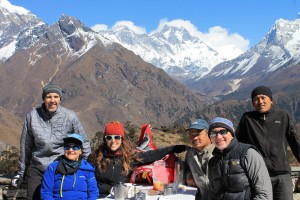
    Thanks to our hardy and fit group members from left- Jennifer Lanaway, Peter Ostlind,  Kishan Chetry (our host), Paul Sively, Ole Lorenzetti. Prior to our trek they were enjoying breakfast at Putao Trekking House.

    Tags: , , , , , , ,

  • 14 Feb 2011 /  Costa Rica, Family Travel

    Visit Costa Rica with kids based in a family-style resort offering fun, recreation and learning activities for kids, parents and grandparents.

    Ann Arbor, MI – November 2, 2010 — Building on more than 25 years of nature and culture oriented travel in Costa Rica with kids, students, adults and nature lovers, tour operator JOURNEYS International is partnering with a Costa Rican family-owned jungle resort to provide a unique seven-day adventure camp and exploration experience. Your family’s Costa Rica with Kids adventure vacation will feature visiting local schools, hiking in the rain forest, viewing a volcano, activities in butterfly and frog sanctuaries, activities with local children, swimming, horseback riding and white water rafting in lush tropical environments.

    The Costa Rica with Kids Family vacations are scheduled as multi-generation, group trips from June 18-24 and Jun 25-Jul 1, 2011. Extensions to visit sea turtle nesting areas, tropical beaches and other Costa Rica national parks and wildlife sanctuaries are available.

    JOURNEYS can also help you visit Costa Rica with kids on a private family vacation at any time of year customized to your personal family travel interests and dates. Family and multi-generation trips are scheduled for Christmas and Spring break school vacation periods

    JOURNEYS also offers family adventure travel vacations and other trekking, safari and photo trips in 50 other destinations in Asia, Europe, Africa, the Americas and Australia.

    About JOURNEYS International:
    JOURNEYS International of Ann Arbor, Michigan, was recently chosen by National Geographic Traveler magazine as one of Ten “Best Outfitters on Earth.” Condé Nast has named director Joan Weber as Top Travel Specialist for family travel every year since 2002. JOURNEYS International has specialized in ecotourism since 1978. JOURNEYS mission is to offer the best nature tours, safaris, treks, adventure travel, family and cultural trips on earth. Whether it is called an eco vacation, adventure travel, ecotravel, ecotour, sustainable travel or responsible travel, for nearly 30 years JOURNEYS has been creating ecologically sensitive and culturally responsible travel to exotic destinations around the world. Specialty ecotrips include women’s tours, Kilimanjaro climbs, exploration cruises, festival trips, student group trips and cross cultural and wildlife safaris. For more information about this trip or other JOURNEYS trips, visit http://www.journeys.travel or contact JOURNEYS at 800-255-8735.
    Contact: Kirsten Kulik
    Marketing Director
    JOURNEYS International
    800-255-8735
    Fax: 734-665-2945

    http://www.journeys.travel

    Tags: , , , ,

  • When you, our travelers, return from your journeys, we look forward to hearing the stories of each trip.  Many of you share how travel has impacted you — by a special event or encounter, by a travel drama that transformed into a positive experience, and most frequently, by the opportunities you had to observe guides and hosts who practice their profession, culture and humanity in an exemplary and profoundly inspiring manner. We understand. One of the reasons we love our jobs is that we, too, enjoy these gifts.

    It is striking to us that expressions of appreciation, and observations of human generosity and kindness, come to us not just from our travelers but also from the guides and hosts on the other end.  It’s not just that we add to the financial well-being of the people and communities we visit, although of course this is vitally important; we also bring the gift of our openness to connection, our eagerness to learn, and our appetites for honest conversation.

    In the midst of this season of giving, we remind ourselves that there are so many tangible and intangible ways to give as a traveler.

    We give tangibly by…

    • Tipping thoughtfully for good service
    • Bargaining playfully but not to strike a hard deal
    • Giving business grassroots operations
    • Supporting the charitable projects of lodges and communities we visit
    • Leaving behind usable clothing, books and equipment you will not need after your trip
    • Visiting schools and donating supplies
    • Offering friendly suggestions about improving locals’ operations
    • Encouraging friends and family to support causes that inspired you during your travels
    • Making a contribution to the most important local institution in the community you visit

    And we give intangibly by…

    • Offering warm greetings and words of appreciation to hosts
    • Demonstrating openness to new perspectives
    • Being courteous to everyone we meet
    • Taking time to talk and discuss with local professional peers about common interests
    • Sharing news about the world and information about our country with people in autocratic countries with no access to these stories
    • Indulging school children (and others) in their efforts to practice English
    • Supporting ideas of conservation, and non-consumptive appreciation of nature and traditional culture
    • Listening attentively to the ideas of locals and of fellow travelers, and following up with thoughtful questions
    • Being a model of tolerance toward all people and religions
    • Sharing stories of our own lives, family and work with guides and hosts
    • Being respectful of local cultures by learning about local customs in advance of arrival, then honing this knowledge throughout the trip
    • Letting guides and hosts see their worlds through our eyes by articulating our responses to new experiences
    • Retelling the stories of our trip after we return home, to raise global awareness of the joys and challenges of lives in all different places

    In this season of giving, please help us build these lists.  Share with us the ways in which you have seen the gifts of travel.  This spirit of giving can carry us from this season into a year of generosity and gratitude.

    Tags: , , ,

  • South India is a great winter destination for sunny weather, warm hospitality and a  delightful taste of Indian culture, nature and cuisine.  Here are some impressions from a January-February 2010 trip I made with four JOURNEYS  clients and our naturalist guide, Avi Sakhrel.

    Starting at the southern tip in the state of Kerala

    The more trips I make to India, the more I realize I have yet to learn, experience and understand about the world’s second most populous nation. Our trip began in Trivandrum, continued to the the southernmost tip of India at Kanyakumari and then wove a  route by van, boat and train to Goa via Kochi (Cochin).

    Kerala has the highest literacy level in India. It also has an elected communist state government and a very well maintained system of roads, parks and public transportation.  This the ayurvedic health and healing center of India. Often combined with yoga, meditation and homeopathic methods, the ayurvedic system is aligned with Hindu beliefs and seeks to prolong life by addressing stress and balances in body.  Most local hotels and lodges offer ayurvedic massage  and morning hatha yoga as part of their services.

    I loved the food.  The larger lodges and resorts offer both Western and Indian cuisine buffets, but I found that iddly (rice dumpling) and dossa (rice flour crepe) served with a sambar curry made a great breakfast. Shrimp, prawn, fish , other sea foods and good tea and coffee were always on the menu.

    Coconut trees were part of the landscape whenever we were near the coast.  Huge coconut plantations dominate the agriculture in many areas.  We learned that with the economic progress of these areas and with many people seeking employment in the cities the landscapes of palm plantations and rice fields as fewer people seek the low paid and often difficult jobs traditional agriculture provides.

    An Elephant Festival

    The trip was timed to visit the local Gajamela Festival at ancient Parthasarathy Temple.  The event was spectacularly colorful and dramatic with troops of drummers, floats, men in make-up and costumes representing  tigers, leopards and panthers.  Two dozen parading, caparisoned elephants competed for prizes as most magnificent animal.  Thousands of local people participated in the events while just a few of us foreigners marveled at the color, volume and intensity of the celebration.

    Traveling by houseboat

    Kerala is known for coastal lagoons. We traveled through some of the lagoons in our luxuriously-appointed bamboo thatched houseboat to appreciate the life on the backwaters.  Watching palm-framed  sunset and sunrise from the comfort of the houseboat deck we felt a timeless connection with thousands of years of history in the area. We stopped at several palaces of maharajah dynasties and noted that the palace architecture offering airy, elevated walkways and balconies still features in local design.

    We spent a very comfortable night on a houseboat cruising the lagoons near Alleppey,  We watched the sunset and sunrise while anchored in the middle of a shallow lagoon as terns and herons flew to and from their roosts. It was nice to be of the highways for a while.  The houseboat took us to our accommodations at Coconut Lagoon Lodge where we explored the waterways by small boat for a sense of life on the lagoons .

    Cruising Kochi

    Kochi is a beautiful port city with a colorful colonial and pre-colonial legacy.   We took morning  sunset boat trips around the harbor and observed the famous Chinese fishing nets in action.

    We traveled by overnight train and early morning coach  transfer to Dandeli Sanctuary in Karnataka State.  Trains in India are very popular ways to travel and generally quite reliable.  Booked in Second Class Sleeper cars, we were comfortable and uncrowded.  It helped to have Avi alerting us to our station and helping us plan for the process of boarding and disembarking the train.  It helps not to have too much luggage.  We were all able to handle our own gear. Porters are sometimes available to help, but not always.  On the train we had plenty to eat from our carry-on lunches, but there was also food and beverage sold by vendors who worked the aisles. The train was clean, relatively quiet and odorless.

    Dandeli Wildlife  Sanctuary

    Situated at about 4,000 feet elevation in the Western Ghat Range, this park offered us a chance to hike in search of wildlife. While we saw signs of tiger, our best large mammal sighting was a herd of Gaur or Indian Bison.  Bonnet Macacques and Black-faced Langurs were abundant.  Everywhwere we saw Malabar Giant Squirrels feeding on bamboo seeds.We also visited a crocodile-clogged river. We observed more hornbills that I have ever seen in one location, including the Great Hornbill and the Malabar Pied Hornbill which is JOURNEYS’ logo bird. There were scores of these birds all around  our lodge on the Kali River. We also went out at night in search of the Sri Lanka Frogmouth and were rewarded with great views of these birds attracted to imitations of their call notes. Other species in the area included the tiny Vernal Hanging Parrot,  Drongo Cuckoo, many species of Sunbirds and numerous of the south Indian endemic bird species.

    On to Goa

    From Dandeli we drove three hours to Goa. Goa was a Portuguese colony until 1962 and still retains a European flavor though the Portuguese are long gone. I had  limited expectations for the tour of Old Goa, the original port site and location of spectacular cathedrals. In fact, the grandiosity of the cathedrals and churches almost exceeded the magnitude of the sins committed here in the name of God by the Portuguese. Built with the labor of African slaves and serving as headquarters for the inquisition and execution of non-believers, the original settlement  was abandoned  due to a cholera epidemic in the early 19th Century. The last vestiges of Portuguese political influences were purged in December 1961 and  Goa became a state of India in 1962.

    Goa is larger than I had thought, has more beaches and less shopping that my obviously incorrect stereotype.  The beaches are broad, beautiful and clean, but for most American travelers they are not the main attraction.  Russian tourists are everywhere on the beaches and have created a cultural enclave based on beer drinking  and exposing large amounts of white flesh to the hot sun.  The forests and colonial architecture of Goa were more interesting to us.  We chose to stay at an old Portuguese mansion, Vivekanda Dos Palhacos,  Large rooms furnished with antiques and old books and wonderful Goan cooking made our stay comfortable.  We enjoyed  a visit to the old community of Panaji and Avi and I made a birdwatching excursion to Backwoods Camp where we observed such interesting species as Malabar Trogon, Asian Fair Bluebird and Pompadour Green Pigeon.

    If you visit South India…

    No matter how much time you have, India invites you to continue on with the temptation of  cultures, wildlife and scenery dramatically different from what you may have already seen, no matter how long you have been traveling.  After many visits to India since the 1970’s this visit stood out for several reasons.  Throughout  the trip we met friendly, educated sophisticated people.  English is widely spoken in this area and it was often possible to talk with local people.  However, apart from Goa, most of the travelers we met were other Indians. Even in Cochi, a favorite tourist port of call, once we left the main Fort area we met few foreign travelers and almost no Americans.  The weather in January and February is superb in south India and we congratulated ourselves for having avoided the cold and snowstorms back home. The monsoon strikes this area hard in late June and July, but  we were intrigued to wonder if the experience of observing the rains from the comfortable verandahs, balconies and  pavillions our accommodations featured might be a very positive and unique experience in itself.

    Tags: , , , , , ,

  • For the last three days we have been in Dandeli National Park deep in the Western Ghat mountains of Karnataka State.

    The Bison River Resort is quite simple in all respects.  The staff is friendly, but not to organized and their English is not very good. The food is basic but ample and tasty, if you like Indian food.  The most distinctive natural quality of the place is the larger population of hornbills, including the JOURNEYS logo bird the Giant Hornbill and similar  Malabar Pied Hornbills.  They are eating the ripening figs in the trees near the lodge and make course honking noises as they gobble the fruit and fly around.

    The first night here we all got in a coracle and floated on the river.  The original coracle is a animal hide, circular boat used for fishing.  Our itinerary suggested that we would all pile into a buffalo hide coracle for this part of the trip. In fact, the Bison River Resort coracle is something like a 12′ in diameter steel wash tub.  Or, you might think of it as a round hot tub with the water on the outside and dry seats in a ring around the inside.  We all got in and two resort staff paddled us up the river in the late afternoon.  We saw lots of birds including more than 100 hornbills. Those of us with telephoto lenses took good pictures.  Avi was thrilled to see a Lesser Fish Eagle, a rare species intros area. I was personally thrilled to see more “Onlys” than our newsletter has awards.

    Malabar Pied Hornbills

    Malabar Pied Hornbills

    On the train

    On the train

    Lesser Fish Eagle

    Lesser Fish Eagle

    Tags: , , , , ,

  • Ben A. arrived yesterday in good spirits.  It is good to have another member of the group. We have done two harbor cruises. One at sunset was great to take pictures of the Chinese fishing nets against the setting sun.

    The enormous Queen Mary Two sailed into the harbor this morning disgorging 2500 tourists into the town so our options for evening sightseeing are being challenged.

    Tomorrow we leave for Dandeli by overnight train.

    Avi is doing a great job and keeps talking up the Great Cats tour and now the India Great Literature tour. He also gave us a complete account and slide show of his wedding which was quite amazing.

    I have internet for the next 20 hours, but expect to be without for the following three days until we get to Goa. Best to all.

    Islands off the southernmost tip of India

    Islands off the southernmost tip of India

    drummers at Gajamela

    Drummers at Gajamela

    Fishermen at sunset near Allepey

    Fishermen at sunset near Allepey

    Chinese fishing nets at Cochi

    Chinese fishing nets at Cochi

    Our houseboat crew

    Our houseboat crew

    Waterways near Allepey

    Waterways near Allepey

    Tags: , , , , , ,

  • Wildlife on the Rwanda-Uganda Primate Safari

    The volcanic ranges of central Africa hold about 700 Mountain Gorillas and many other primates. Our group of ten JOURNEYS travelers made a concerted effort to see as many of these rare primates as possible in Rwanda’s Volcanoes National Park, Uganda’s Impenetrable Forest and other special reserves.

    Rwanda’s Return
    We began our trip in Kigali, Rwanda. By African standards Rwanda is clean, prosperous, well-fed, safe and environmentally aware. Plastic bags are illegal. Traffic rules are enforced. Markets are stocked and the roads are in good repair. Private investment is in evidence. Since the genocide of a hundred terrible days in 1994, the country has rebuilt itself politically, socially and economically. I last visited Rwanda in 1992 when the situation was tense. Today there is still grieving and anger, but also healing. Through a vast amount of international aid, all aspects of society are being repaired. Every visitor should see the National Genocide Museum in Kigali. It helps us appreciate the futility of saving other species if we do not respect and preserve our fellow humans.

    On the Trail of Mountain Gorillas
    The Mountain Gorillas of Parc National Volcanoes are in good hands and their numbers are growing. There are two distinct and separate populations. One ranges through three countries in the contiguous protected reserves of the Congo, Rwanda and Uganda. These animals are most reliably, safely and conveniently visited from near the Rwanda town of Ruhengeri. We stayed 40 minutes away in the spectacularly sited Virunga Lodge high on a ridge between two caldera crater lakes overlooking the volcanic peaks where the gorillas live. Gorilla viewing permits are limited to eight persons per day per family group of habituated gorillas. Visits are limited to one hour and occur in the morning when the animals are likely to be feeding. Reaching the free-ranging group for which you have a permit may require up to three hours of hiking each way, but in our experience the total time from departing the headquarters orientation session and checking back in after the visit was more typically 3-4 hours. My sense was that the older the traveler, the more likely they would be assigned to one of the groups requiring less walking. Permits cost $500/ person per visit. These usually must be acquired months in advance and every available daily permit is pre-sold. Gorilla tracking takes place 365 day a year. It can rain any day, but there are more wet days in April, May and November. Because the gorillas often cross international borders or wander to inaccessible locations, the number of groups which can be visited on any one day may range from 6-8, but visits to designated “research groups” can take up the slack if regular tourist groups are not accessible. Trackers pre-locate the habituated groups early in the morning and radio their location to the guides leading the tourist visitors.

    Encountering Gorillas
    While the park rules suggest you must be at least seven meters from the animals to prevent transmission of disease, as a practical matter, the habituated gorillas seem to ignore humans and often wander directly toward the awed human apes. The gorillas are vegetarians and very peaceful, albeit powerful. In 1992 we were given explicit instructions about avoiding eye contact, bending down, being quiet and giving especially wide berth to the silverback patriarch of the group. We received no such instruction in 2009, and it did seem like the gorillas were oblivious to our presence. I think all of our group obtained great photos similar to the ones in this review. Each visitor receives a souvenir certificate of accomplishment upon return to check back in at the headquarters. For those who prefer not to carry their pack, lunch, raincoat and camera gear, porters are available for $10 in Rwanda and $15 in Uganda. The porters tend to be former poachers or farmers whose fields are sometime feeding grounds for gorillas and other animals on the edges of the park. Rain is possible anytime of year and the terrain can be muddy, steep and prickly. Gorillas seem to love eating nettles, enormous thistles and bamboo. Long pants, hiking boots, long sleeves and gloves are useful if not essential in this habitat.

    In the course of our trip we had four encounters with four different gorilla groups. Each was a different experience with respect to the habitat in which the gorillas occurred, the behaviors we observed, number of gorillas in the family group, and the distance the group traveled during the hour we spent with them. We had the impression that poaching in Rwanda and Uganda was essentially ended, though may still be a problem in Congo. The total population is slowly increasing. We happened to arrive on the Gorilla Naming Day, an annual event of national significance during which each of the newly-born gorillas receives an official name. There are speeches, dancers, music and media coverage. On this particular day, Jack Hanna representing ABC Good Morning America covered the event for international broadcast.

    We drove from Rwanda to Uganda and spent a night at Mount Gahinga Lodge at the edge of Mgahinga National Park. There were no gorilla groups in the area, but we made a hike into the park to look for the most colorful bird in the country, the Ruhenzori Turaco, which we did find. The lodge was a very friendly place serving spectacularly tasty meals and with a bird bath attractive to lots of birds.

    Entering the Impenetrable Forest
    We drove to Uganda’s Bwindi impenetrable Forest National Park, home of the other, separate, Mountain Gorilla population. The drive through rural Uganda was really scenic as the road wound through hilly, lake-dotted, volcanic terrain sculpted by terraced fields containing corn, bananas, cassava, beans, squash, tea and coffee. Cassea trees were in bloom with their bright yellow blossoms. Numerous pairs of Crowned Cranes, Uganda’s national bird stalked insects in the farm fields. Children in brightly colored school uniforms walked to classes and waved to us as we passed. Bwindi park is lush, steep and inviting. As you move west across East Africa rainfall increases as does species diversity and the amount of land in natural vegetation. Bwindi’s forest hold a dozen species of primates including Chimpanzees. Our lodge in Bwindi offered a spectacular view into the rainforest and even offered the treat of an intense, but brief, thunderstorm just after we checked into our cottages. From our base at Volcanoes Bwindi Lodge we made two visits to Gorilla groups.

    Tracking gorillas in Uganda follows much the same protocols and rules as Rwanda. My own sense was that Rwanda is better organized and more efficient in staffing and managing the activity. In both destinations, the parks staff divides the day’s participants into parties of eight with each group assigned to a gorilla group. There were occasions where it seemed the park was not following its own rules regarding maximum permissible numbers of visitors, but overall we had capable guides and efficient trackers who were able to show us the primates with a minimum of hiking and a maximum of understanding of what we were seeing.

    Chimpanzees and other Primates
    We tracked chimps in four locations in Uganda. They were a bit more elusive than the gorillas. Chimps spend more time in the tops of trees and they are faster moving through the forest. Chimps vocalize more, but also seem to cover a larger daily range and have a broader diet, often including other primates. I particularly enjoyed tracking chimps in Kibale forest. We visited part of a large group which was separated from the rest of its membership. As we watched there was a wild chorus of hooting and calling across the forest and the group reunited with embraces and swinging of arms before settling into casual eating, mutual grooming and resting.

    On our two-hour hike in Bigodi Community Forest Swamp during a rainstorm, we saw more species of primates at the edge of agricultural lands than anywhere else on the trip. Local farmers, with the help of a Peace Corps Volunteer about 20 years ago, decided to protect an area of Raphia and Papyrus both to preserve the natural vegetation and give sanctuary to the nine species of primates in the area. A local resident conducted our walk, pointing out seven species of primates and many of the 137 species of birds known from the area. The primates sometimes create a nuisance for local farmers, leaving the swamp and forest to raid crops, but income from the guided hikes provides compensation, pays the guides and supports a local school.

    Also Fantastic for Birds and Other Mammals
    While the chimps, gorillas and primates may be primary reasons to visit Uganda, the country is one of the best in Africa for birding with more than 1000 species. Uganda has two huge national parks; Queen Elizabeth and Murchison Falls, both offering vast savannas that are well populated by antelope and their predators. Queen Elizabeth park has famous tree climbing lions. Murchison Falls, on the upper Nile, hosts some the highest concentrations of hippos and crocodiles in Africa. Both offer water-based safari cruises which offer spectacular access to bird and animal photography opportunities. There are also numerous other parks and reserves in Uganda providing wonderful opportunities for customized nature trips.

    Cause for Celebration and Resolve
    My best moments on this trip involved the contact with the gorillas and chimps. One might think that because these primates are habituated to accept the proximity of humans, the result is a zoo-type experience. This not at all the case. In my opinion the habituation is a celebration of our capacity to understand and protect these animals. When you are very close and able to hear them chewing, when you can smell them and make actual eye contact, you also appreciate their vulnerability. In a sense, these few animals still exist because we pay to see them. Millions have been lost throughout Africa and the rest of the world because we did not create either the inter-species relationship or the economics to justify their preservation.

    For all the members of my travel group, the experience was inspirational on many levels. We could not help but see our own primate reflection in their eyes and in their circumstances. We must continue to ask what we must we do to make sure all of these marvelous animals continue to live in a sustaining environment and in peace.

    Thanks to all my fellow participants. (Standing from left) Charlene Henderson, Larry Miller, Judy Miller, Bill Livengood, Barbara Bailey, Will Weber, Gordon Whyte, (seated) Carol Kulak, Dietrich Geschke, Lynda Linker

    Tags: , , , , , , , , ,

  • National Geographic, publisher of Adventure Travel magazine awarded JOURNEYS International top honors for a second year in a row in the prestigious “Do-It-All Adventure Travel” category.

    Buddhist monk in Kamu Village in a remote area of LaosNational Geographic Adventure surveyed clients of more than 240 adventure travel companies around the world and ranked them according to education, sustainability, quality of service, spirit of adventure and client satisfaction. Ranking in the top ten in all categories, JOURNEYS scored 100% for client satisfaction.

    “We are honored by National Geographic Adventure and our clients for awarding us one of the highest recognitions in the adventure travel industry,” states Joan Weber. “We are dedicated to continuing to provide travelers with ecologically responsible trips that will delight the senses and renew the spirit.”

    In 1978, before the terms eco-travel, sustainable travel, or responsible travel became popular, Will and Joan Weber, the founders and directors of JOURNEYS International, took a small group of open minded travelers on a journey to discover Nepal. Their hope for this trip was to provide their travelers with an emotional and spiritual experience as well as a physical one .  The tour involved learning about the local culture and the natural environment through direct, respectful interaction and contributing to the preservation of the Nepalese culture.  Since then, the JOURNEYS staff has continually searched for new destinations and new ways for clients to experience them. “At JOURNEYS, adventure travel means more than just a physical experience – it should be emotional, intellectual and spiritual too,” according to the editors of National Geographic Adventure. “Clients explore these inner realms during tours that might include a mediation session with Buddhist monks in Ladakh or hang time with local healers in the volcanic highlands of Guatemala”

    The woman of Mbitini village welcome travelers with ceremonial escort.

    For more information on JOURNEYS family trips, community based tours or other types of adventure travel go to www.journeys.travel or call 1-800-255-8735.

    About JOURNEYS International:
    JOURNEYS International of Ann Arbor, Michigan, was recently chosen by National Geographic Adventure magazine as one of the Ten “Best Outfitters on Earth.” JOURNEYS International has specialized in ecotourism since 1978. They offer the best nature tours, safaris, treks, adventure travel, family and cultural trips on earth. Whether it is called an eco-vacation, adventure travel, eco-travel, eco-tour, sustainable travel or responsible travel, for 30 years they have been creating ecologically sensitive and culturally responsible travel to exotic destinations around the world. Specialty eco-trips include women’s tours, Kilimanjaro climbs, exploration cruises, festival trips, student group trips and cross cultural and wildlife safaris. For more information about this trip or other JOURNEYS trips visit www.journeys.travel or contact JOURNEYS at 800-255-8735.

    Tags: , , , , , , , , , , , , , , , , , , , , ,

  • Lhasa, Tibet is accessible by road, air and rail, provided you can get the permits, reservations or vehicles to make the journey.  I had been to Tibet on three previous occasions since 1986 using some combination of air and road travel, but the train trip sounded like a good way to see a great deal of the Tibetan Plateau than the road or air routes.

    The Lhasa Train


    In the Station

    I had just led a group to witness the Total Solar Eclipse of Aug 1, 2008, near Hami in Western China. Four of us from that group flew to Lanzhou where we caught the train to Xining station and began our 27 hour journey to Lhasa. While the rail line exists for many reasons, catering to foreign tourists does not seem to be high on the list. On the day we traveled, there were only 10 foreigners all confined to one car in which none of the conductors or other staff spoke any English. While there were promotional videos, they had little to do with the train and the sound track was in Mandarin. The electronic text crawl sign in the corridor of our  ”soft  sleeper” car in which we traveled consistently mis-named the stops and the expected time between stations.  It was often not clear how long the train would be stopped between stations and whether it was possible or advisable to get off. While the cars and the bedding where clean, there was very little luggage storage space within the small four-berth cabins, and none at all outside of the cabin. This meant that two of the people in our cabin with large luggage had to share the microberths with large bags. Upper berths had no visibility out of the one window in the compartment.  Sleeping car was adjacent to a dining car which had large windows. It was a much more pleasant place to sit than either our sleeper or the non-sleeper coach.  The several hundred Chinese passengers on the train included a very high percentage of smokers and outside of our non-smoking sleeper, the air was blue with smoke. This smoke seemed to permeate all areas of the train via the ventilation system. The dining car served relatively expensive, but mediocre food.  My first meal was breakfast which consisted almost entirely of thin gruel and cold, pickled and fermented vegetables. There was no menu in English.  If you travel this train, bring your own food.  Lunch and dinner were only marginally better and the beer was warm.  The cost and quality of the food meant that not many people actually ate in the dining car, but during dining hours table reservations were still required. During other hours we kept getting chased out of the dining car because there were “staff meetings”.  These seemed better described as staff naps. The train ride was very smooth and quiet and the views were fantastic. We saw numerous herds of chiru or Tibetan Antelope. Herds of yak, high lakes, eagles, ravens and hundreds of snow covered peaks provided an evolving panorama of beauty.  We passed through several long tunnels and the train gained altitude to (supposedly) over 16,600′ at Tangulla Pass, the highest rail point in the world, though we passed this point unceremoniously and without acknowledgement. 

    En route to Lhasa


    The view from the Lhasa Train

      Before we departed the station in Xining, we were required to complete a medical form which seemed oriented at identifying passengers who might find difficulty with the altitude. We were asked detailed questions about heart and blood pressure, diseases and medications we were taking. This all seemed quite responsible  except that no one could speak or read the English answers we provided.  We had been told that oxygen was provided as a courtesy in all the sleepers and this was reassuring, but there were no masks or fittings for the oxygen valves.  Several of us developed headaches and the altitude served to make the bad food even less attractive, but we did not suffer greatly or have serious problems  from the altitude. We arrived into the Lhasa station about 10:30 PM. I was surprised by how many hundreds of people disembarked. There was nothing friendly or welcoming about Lhasa station. There were scores of uniformed and armed security people who formed a gauntlet through which passengers dragged their luggage. There was no porterage assistance available an no baggage carts.  A curfew was in effect and we were told that it was necessary to travel directly to our hotel.  The city was very quiet and the streets eerily empty. On balance it was an interesting trip which offered a view of Tibet with no opportunity to interact.  The train was operated safely and capably, but with no evident effort to demonstrate personal passenger service. Every one was doing their job, and not a bit more. Given the choice of taking the train or having an flown to Lhasa and taking an extra day to travel in the Tibetan countryside by private taxi, I think I would have chosen the plane and taxi. ww

    Tags: , , , , , , , , , , , , , , , , , , , , , ,

  • JOURNEYS International

    JOURNEYS International is proud to announce that Condé Nast has chosen Directors Will and Joan Weber for 2 Top Travel Specialist Awards

    For the 6th year running, Joan Weber, Director and Co-Founder of JOURNEYS International has won the Top Travel Specialist Award for Family Travel:  International Adventure and Eco-travel.  Joan, a former teacher in the United States and Nepal, has an extensive history in planning family travel.  Since the time her children were toddlers, about 20 years ago, Joan and her husband, Will, have been trekking their children across the world to learn about new destinations, cultures and adventures.  She has taken this knowledge and has help plan over 300 annual family trips.

    “The one of the many reasons we have won this award for the last 6 years is that we have learned from our own family travel experiences and have applied these ideas to our trips.  We have learned that good planning does not mean over-scheduling. There need to be spaces of time for discovery and serendipity. We know that parents enjoy our trips when their kids are happy, and we know that kids are happy when they rest, eat well, and participate in engaging activities, which stimulate their curiosity,” States Joan Weber.

    Playing Soccer on our Jambo! Tanzania Family Safari

    For the 5th year running, Will Weber, Director and Co-Founder of JOURNEYS International has won at Top Travel Specialist.  This year he received the Top Travel Specialist for Community Based Tourism.  As a former Peace Corps volunteer and ecotourism pioneer, Will has developed programs through out the world where travelers can stay in private quarters adjacent to a village family’s home, accompany them to market, learn their craft, join them for meals and more. 

    “Through JOURNEYS I have been instrumental in helping local communities in Asia, Africa, the Pacific and Latin America develop a capacity for hosting American tourists. I have served as a consultant to US/AID in this capacity in the Pacific and Guyana. Our company offers high quality community-based tourism in 20 countries. We support financially, through our charitable, non-profit Earth Preservation Fund, numerous incipient programs around the world with an expectation they may grow in capability to host high end travelers in acceptable standards.  Most of our trips throughout the world feature opportunities to add extensions or create whole FIT itineraries based in community-hosted environments, if the main trip utilizes more conventional accommodations. This is not just a matter of responding to growing market for such travel opportunities but a long-term philosophical commitment to building cross cultural strategies for sustaining local communities, cultures and environments.” States Will Weber

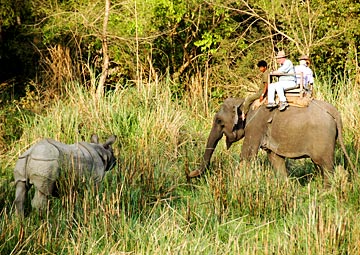
    A close encounter with a Rhinoceros as seen on our Wild Himalaya Trip

    For more information on JOURNEYS family, Community Based or other types of adventure travel go to www.journeys.travel  

    Tags: , , , , , , , , , , , , , , , , , , , , , , , , , , , , , , , , , , , , , , , , , , , , , , , , , , , , , , , , , , , , , , , , , , , , , , , , , , , , , , , , , , , , , , , , , , , , , , , , , , , , , , , , , , , , , , , , , , , , , , , , , , , , , , , , , , , , , , , , , , , , , , , , , , , , , , , , , , , , , , , , , , , , , , , , , , , , , , , , , , , , , , , , , , , , , , , , , , , , , , , , , , , , , , , , , , , , , , , , , , , , , , ,