• Hiking the mountains, forests and villages of northern Myanmar
    By Will Weber, JOURNEYS Director

    January is the ideal month to explore the northern most valleys of Burma, one of the least visited regions of the Himalayas. Rich with birdlife and friendly cultures we walked through towering forests and along crystal clear streams and did not encounter any other foreign travelers.

    A Quick Stop in Yangon
    This was my fourth visit to Burma so I had some sense of what to expect, but I was pleasantly surprised by what we found upon arrival in Yangon.  There is a new airport with efficient immigration and customs. Changing money was easy. Everyone was predictably courteous. Nothing about this government encounter seems evil or authoritarian.  Yangon has moderate traffic, but the city is clean. The ride to Kandawgyi Palace Hotel was entertaining for the passing display of ancient and modern buildings, vehicles and lifestyles.  We spent two nights here on arrival with sightseeing to several markets, the riverfront and the great Shwedagon Pagoda. This enormous golden Buddhist stupa is the most sacred (and most valuable) Buddhist site in Myanmar. Every visitor should spend a couple of hours here, preferably around sunset and if possible on the night of a full moon when thousands of lamps are lit. It is a photographer’s delight. In contrast to many countries, most people in Myanmar are pleased and flattered to have their picture taken and never ask for money.  At Shwedagon, among the many pilgrims, we observed a monk meditating by looking directly at the setting sun.

    Elsewhere we visited a new, spacious, open and clean vegetable market inviting not only pictures, but conversations about the nature and origins of the many produce items for sale.

    Flight hopping to Putao
    Our destination was the northern most tip of Myanmar accessible by a long, two stop flight via Mandalay and Myitkina.  The ATR-72 turboprop aircraft of Air Bagan was smooth and comfortable. We flew low enough to  observe the landscapes below.  The farther north we flew the more extensive the forest became and the clearer the streams.  There are only about four flights per week to Putao and the good weather season is from October to April. Road access is possible in the dry season but the roads are rough and tortuous. The lack of traffic and modern buildings gave Putao a friendly village feeling.The Putao Trekking House (left) where we stayed for three nights was an especially comfortable and hospitable base. Built according to local architectural style, but from beautiful local hardwoods, a generator supplements limited local electrical supply. Rooms have comfortable bedding and there are attached,  Western style bathroom facilities. It was a last chance to charge camera batteries. We enjoyed a local culture show in the  spacious bar, dining and meeting hall cum arts and crafts museum.  The meals at Putao Trekking House are superb. The landscaped grounds may be a good place to start your bird list.  It is an easy walk to to the local morning market and there are bicycles available for excursions farther afield.

    We left early the next morning by 4×4 for 20 km trip to the trailhead for our trek. I was surprised to travel through extensive native grassland plains, a very rare habitat in this part of Asia, where most level land is claimed for agriculture.  At several river crossings we all had to get out and walk across the creaky bridges. The rivers they spanned were crystal clear.  At the point where the road became a path we started walking. Our group of five  had a support staff of 15 including a guide, cook, guide and cook assistants and local porters. This area is so remote almost no one speaks Burmese, let alone English.  But people along the way in fields, houses and on the trail were as curious about us as we were about them.  Smiles, gestures and sharing the digital images in our camera view finders all helped to create multi-media conversations.  While English is a subject taught in the schools, we happened to meet a high school English teacher in Putao and it was extremely difficult to communicate with him without the assistance of our guide-translator.

    The first day of our trek was the most difficult as we ascended a steep track over Mt  Shangaung (4500’), a climb of over 3,000’. We all made it up and over and our reward was a more gentle down slope through beautiful broad leaved evergreen forest eventually arriving at Namro River and our night stop at Wasandum, a Rawan Village.  A few homes set among rice terraces were our neighbors for the night as we shared the second level floor of the village guest house.  We enjoyed a fire built in  a square fire pit inset in the floor of the house. Off in the distance were heard the congregants singing in the village church.

    Our second day of trekking, by comparison was almost level as we hiked up the Namlang River Valley to to Ziyadam.  The weather was clear and cool and the snowy Himalayan peaks came into view.  There was no haze in the air and the  river was so clear we could see the fish swimming. We passed a house preparing for a wedding and the families already gathered willingly posed for pictures.  We were invited to the ceremony, but still had about 9 kilometers of hiking to complete that day. I was impressed that some villagers along the way had constructed miniature hydro electricity installation that supplied enough power for basic lighting and a radio or cooking appliance.  Even though there was little about the architecture, agriculture or local lifestyle that identified the century we were in, a very simple, fragile, part-time electrical connection seemed to give people a great sense of pride and increased well-being.  This far beyond roads, most of the bridges were made of bamboo and saplings.  The water level in the streams was quite low so we had no problem  crossing the simple structures. It was evident that as the water levels rise May and June, this trail and access to these villages would be much more of a hiking challenge.

    Several of us were alert for the different species of birds we observed along the trail. On this day we counted Ibisbill, Brown Dipper, Black Eagle, Northern Lapwing, Indian Cormorant,  Blue-eared Kingfisher, Great Hornbill (at left), Mountain Imperial Pigeon, Yellow-bellied Fantail and Collared Scops Owl among our observations.

    Arrival at Ziyadam
    We finally arrived at the guest house at Ziyadam, the last village in this valley before the trail ends and the steep mountain slopes begin.  It is still at least a three day walk from here  to reach the glaciers which look like they are just a couple of miles away.  We enjoyed the environs of Ziyadam which offered great views, a variety of natural environments to explore and friendly local people.  We spent two days here and might have enjoyed another. The community organized a simple cultural show welcome and we were invited to join the long snake dance as dusk fell. Our host was a local hunter who led us on a nature hike which tested out fitness and ability to squirm and wiggle through passageways he cut through the brush and bamboo. We did not see any significant wildlife, but gibbons called from the deep forest above us.

    While on the trek we enjoyed excellent and ample meals. A peek in the kitchen revealed that our cook accomplished his magic over a single stove.  His cooking was not only tasty and nutritious, but none of our party suffered any kind of digestive distress and there was always enough for second helpings.  In general, I was impressed by the general attention villages gave to sanitation and public health, in contrast to many remote villages I  have visited in Nepal, India and China.  In this poor region there are few resources for education, medical care or public services, yet the villages were neat and clean.  Village headmen we met had some medical training and most children were attending school, though the schools had scant facilities and teachers had little training.

    Sad to Leave
    We left many of our extra medicines behind with a headman whom we were confident could utilize them wisely.  Our host operator Journeys Nature and Culture Explorations, supports a number of orphans in school and has contributed significantly to village income by hiring people to help accommodate groups like ours. I realize many people feel that it is not politically correct to visit Burma, but it was evident to all of us that our group was supplying information, medicine, clothing, training and income to poor, but motivated people who receive no services from their government. This dynamic of willing traveler donors interacting and supporting highly appreciative local villagers gave everyone a good feeling and a sense that this kind of  tourism is a most satisfying form of efficiently-delivered and highly-targeted foreign aid. Our own government tries to make it difficult for the autocratic rulers of Myanmar by discouraging tourism, denying visas and penalizing American businesses who try to operate in Myanmar. As individual ambassadors of goodwill, travelers can slip through this political and institutional boycott and deliver meaningful assistance to the poorest and most deserving people of Burma.

    If you travel to remote areas of Burma think about leaving things like clothing, school supplies, children’s books, tooth brushes, OTC medicines and insect repellent behind as gifts for local people.

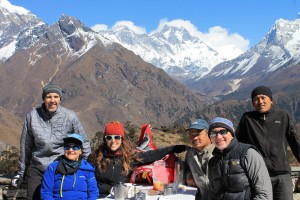
    Thanks to our hardy and fit group members from left- Jennifer Lanaway, Peter Ostlind,  Kishan Chetry (our host), Paul Sively, Ole Lorenzetti. Prior to our trek they were enjoying breakfast at Putao Trekking House.

    Tags: , , , , , , ,

  • Happy to have his photo taken


    It was wonderful to be back in Myanmar. This was my fourth visit to Burma so I had some sense of what to expect, but I was pleasantly surprised by what we found upon arrival in Yangon.  There is a new airport with efficient immigration and customs. Changing money was easy. Everyone was predictably courteous. Nothing about this government encounter seems evil or authoritarian.  Surely, the Burmese are among the friendliest people in Asia.

    We made a quick visit to the markets and monuments of Yangon and everyone in our group of five was especially impressed by the great golden Buddhist  pagoda of Shwedagon which was especially impressive at sunset. Our primary destination was the northernmost tip of Myanmar accessible by a long, two-stop flight via Mandalay .  The ATR-72 turboprop aircraft of Air Bagan was smooth and comfortable.  The farther north we flew the more extensive the forest became.    There are only about four flights per week to Putao and the good weather season is from October to April. Road access is possible in the dry season but the roads are rough and tortuous. The lack of traffic and modern buildings gave Putao a friendly village feeling.The Putao Trekking House where we stayed for three nights was an especially comfortable and hospitable base. Built according to local architectural style, but from beautiful local hardwoods, it offfers a rich, yet simple ambiance.

    Our main objective was a trek to Ziyadam, the last village at the end of a trail that leads to the base of the Burmese Himalayas. Although we had to cross numerous streams on improvised stone and stick bridges, this was the dry season and there was no real  problem.,  One day required a 3,000 foot climb over Mt. Shangaung, but it felt like a privilege to hike through beautiful sub-tropical primary forest that separated friendly villages.  Our group of five Westerners encountered no other foreigners on the trail, but lots of interesting local travelers like the fellow at right.

    This is a trip we plan to offer again next January  as the Trails of Himalayan Burma. I have created a Photo Gallery of the trip, and a visit to the Ngapali Beach area of coastal Myanmar. If you might be interested in this trip give us a call.

    Tags:

  • See a Tiger in India or Nepal

    This week international leaders and environmental ministers gathered in St. Petersburg, Russia, to discuss dramatic declines in wild tiger populations across Asia. Tigers have been exterminated from most of their range which once stretched from the Mediterranean to Siberia, Korea and Bali. Now your best chance to see a tiger in the wild is in one of the nature reserves or national parks of India or Nepal. Even here the animals are still under threat from illegal hunters seeking their skins, reputed medicinal body parts, or as illegal pets.  According to the NY Times report or the meeeting, saving the tiger, an animal associated with royalty, fierceness and solitary has a special appeal for leaders like Vladmir Putin who is front and center in the political imagery of tiger conservation. Even the much disparaged military junta of Myanmar is behind the effort and has created the largest tiger reserve on earth. We visit this sanctuary on the JOURNEYS Tiger Trails of Northern Burma, a trip I will be leading next January. It is exceptionally rare to actually see a wild tiger in Burma, Siberia, Sumatra, Bhutan or China where diminishing, secretive populations still exist.  Preserving tiger habitat is critical to the thousands of smaller, less-politically or esthetically charismatic species which are equally endangered by expanding human populations and natural habitat destruction.  We hope this international effort, supported even by the World Bank, will result in a reversal of the tiger trend toward extinction.  In the mean time, if you are eager to see or photograph a tiger in the wild while you still can, we suggest our Great India Tiger Safari or our India Great Cats Safari as the closest to a certain opportunity.

    Tags:

  • Peaceful Valleys of BhutanBhutan has long been that idealized Kingdom where life changed little and people liked it that way.  That romanticized notion may be a fading mirage. A recent feature in the Wall Street Journal suggests that some officials would like to see more foreign investment and conventional development.  Two new airports, another airline, more hotels and local branches of foreign universities all seem to be in the plans for this decade and possibly the next two years. Those of us who find the existing simple hotels quite adequate and the absence of extensive roads and air services part of the charm are concerned. Especially, since the inevitable impacts of climate change, glacial melting  and disruptive weather are making it a challenge to maintain Gross National Happiness under the present simplified  infrastructure. Recent floods wiped out extensive wetland habitat utilized by the rare Black-necked Cranes contributing to a continuing population decline of this object of local and tourist veneration.

    It may not be fair for residents of over developed nations to make judgments about how other countries should shun modern technologies and conveniences. If nothing else the message you might take from these events is that if you have not seen and experienced the wonders of Bhutan personally, you should visit soon. We can help.Peaceful Valleys of Bhutan

  • On a clear day up to 50 planes a day land at Lukla airstrip in Nepal.Reports from Nepal this morning indicate about 2000 foreign trekkers  are stranded at Lukla, the airstrip closest to Mt. Everest National Park due to unceasing bad weather.   Normally, in mid-November more than 50 flights per day ferry travelers between Kathmandu and this tarmac strip at 9,000′ elevation. This year unseasonable weather including high winds, clouds and rain have lingered long after the monsoon normally relents in early October.  In the absence of airplane service some helicopters have  been able to arrive and some trekkers who are tired of waiting are walking out  to the vehicle road about 6 days walk away.  The Nepal Army has been approached for assistance in evacuating trekkers.   While Everest is the most popular trekking destination in Nepal, we are recommending to our clients that they consider lesser known trekking routes in the Arun Valley, Gorkha and Annapurna regions where air access is not problematic and  delays have not been reported. No doubt lots of people now in Lukla are wondering if global climate change is the cause of their dismay.  While American politicians may dispute the reality of climate change the farmers and herders of the Himalayas are extremely concerned that  unprecedented weather patterns of the past decade have changed the calculus of their subsistence existence. Rains are unpredictable, streams dry up, reservoirs fail to fill, storms of extreme intensity damage crops and steeply terraced fields.  None of the traveler’s are likely to die of waiting for a flight, but this may be just another example of climate change becoming ever more perceptible and problematic. Click here for more information on JOURNEYS Nepal trips.

  • 02 Aug 2010 /  Asia, Indonesia, Uncategorized

    Greetings from Yogyakarta, Central Java, INDONESIA!

    Amazing — this trip feels like it’s been 3 distinct trips already and we are only half-way through. Wow.

    Orangutans were spectacular. Apparently we lucked out with a spell of dry weather, and, even though it’s the season when the semi-wild orangutans can easily find food in the forest, MANY decided to come into the camps for the “feedings.” (These are distributions of enormous quantities of bananas on feeding platforms.) We could watch them approach high up in the trees, swing closer, shimmy down and then gorge. The first morning at Camp Leakey we saw 21 different orangutans, many of them mother-baby pairs, and our guide recognized each one by name. (The names are given by Birute Galdikas, director of Camp Leakey.) We blissfully lost track of time and spent almost two hours at a stretch watching the antics and getting fantastic photos.

    The great Buddhist site of Borobodur and the nearby Hindu temples at Prambhanan in Central Java were also spectacular and we were able to view and photograph them in perfect light. I’ve been over-the-top pleased with the photographic subject matter of this trip — such a totally fantastic opportunity to apply what I learned from Wayde in Alaska!)

    Best to all of you,
    Joan

  • 18 May 2010 /  Asia, Bhutan, Nepal

    We went to Dhulikhel and visited B.P. Shresta’s hospital. He’s doing a really cool thing there. The have lots of modern equipment including a MRI & CT machines. Also in Dhulikhel, I climbed the 1000 step Buddha. Yep, it was a thousand steps. My legs hurt today but it was absolutely worth it. We went back to Kathmandu yesterday via Baktapur. What a cool town. I have taken so many pictures that my camera batteries have died right there but luckily one of the other travelers is going to share.

    Today, we were supposed to fly to Lukla, but unfortunately we were unable to because of weather. We’re going to try again tomorrow and spend to night praying to the rain Gods to not allow it to rain. Everyone here has been fantastic. Our trekking guide, Nima, is kind of quiet, but doing a fantastic job and we’re all enjoying his leadership and knowledge. We had dinner last night with most of the JOURNEYS Nepal crew – Natang, Dev, Upash, Narayan, Nima, and lots of others, along with Anchi and Dawa. We are having sooooo much fun. It is fantastic!  Well, I’ve got to run. Since we are in town for another night we are going to having dinner at the Yak & Yet at the request of our fellow travelers.   I will send another update the next time I have access to a computer and the Internet.

    Kerina Rowley

    Asia Destination Specialist

  • South India is a great winter destination for sunny weather, warm hospitality and a  delightful taste of Indian culture, nature and cuisine.  Here are some impressions from a January-February 2010 trip I made with four JOURNEYS  clients and our naturalist guide, Avi Sakhrel.

    Starting at the southern tip in the state of Kerala

    The more trips I make to India, the more I realize I have yet to learn, experience and understand about the world’s second most populous nation. Our trip began in Trivandrum, continued to the the southernmost tip of India at Kanyakumari and then wove a  route by van, boat and train to Goa via Kochi (Cochin).

    Kerala has the highest literacy level in India. It also has an elected communist state government and a very well maintained system of roads, parks and public transportation.  This the ayurvedic health and healing center of India. Often combined with yoga, meditation and homeopathic methods, the ayurvedic system is aligned with Hindu beliefs and seeks to prolong life by addressing stress and balances in body.  Most local hotels and lodges offer ayurvedic massage  and morning hatha yoga as part of their services.

    I loved the food.  The larger lodges and resorts offer both Western and Indian cuisine buffets, but I found that iddly (rice dumpling) and dossa (rice flour crepe) served with a sambar curry made a great breakfast. Shrimp, prawn, fish , other sea foods and good tea and coffee were always on the menu.

    Coconut trees were part of the landscape whenever we were near the coast.  Huge coconut plantations dominate the agriculture in many areas.  We learned that with the economic progress of these areas and with many people seeking employment in the cities the landscapes of palm plantations and rice fields as fewer people seek the low paid and often difficult jobs traditional agriculture provides.

    An Elephant Festival

    The trip was timed to visit the local Gajamela Festival at ancient Parthasarathy Temple.  The event was spectacularly colorful and dramatic with troops of drummers, floats, men in make-up and costumes representing  tigers, leopards and panthers.  Two dozen parading, caparisoned elephants competed for prizes as most magnificent animal.  Thousands of local people participated in the events while just a few of us foreigners marveled at the color, volume and intensity of the celebration.

    Traveling by houseboat

    Kerala is known for coastal lagoons. We traveled through some of the lagoons in our luxuriously-appointed bamboo thatched houseboat to appreciate the life on the backwaters.  Watching palm-framed  sunset and sunrise from the comfort of the houseboat deck we felt a timeless connection with thousands of years of history in the area. We stopped at several palaces of maharajah dynasties and noted that the palace architecture offering airy, elevated walkways and balconies still features in local design.

    We spent a very comfortable night on a houseboat cruising the lagoons near Alleppey,  We watched the sunset and sunrise while anchored in the middle of a shallow lagoon as terns and herons flew to and from their roosts. It was nice to be of the highways for a while.  The houseboat took us to our accommodations at Coconut Lagoon Lodge where we explored the waterways by small boat for a sense of life on the lagoons .

    Cruising Kochi

    Kochi is a beautiful port city with a colorful colonial and pre-colonial legacy.   We took morning  sunset boat trips around the harbor and observed the famous Chinese fishing nets in action.

    We traveled by overnight train and early morning coach  transfer to Dandeli Sanctuary in Karnataka State.  Trains in India are very popular ways to travel and generally quite reliable.  Booked in Second Class Sleeper cars, we were comfortable and uncrowded.  It helped to have Avi alerting us to our station and helping us plan for the process of boarding and disembarking the train.  It helps not to have too much luggage.  We were all able to handle our own gear. Porters are sometimes available to help, but not always.  On the train we had plenty to eat from our carry-on lunches, but there was also food and beverage sold by vendors who worked the aisles. The train was clean, relatively quiet and odorless.

    Dandeli Wildlife  Sanctuary

    Situated at about 4,000 feet elevation in the Western Ghat Range, this park offered us a chance to hike in search of wildlife. While we saw signs of tiger, our best large mammal sighting was a herd of Gaur or Indian Bison.  Bonnet Macacques and Black-faced Langurs were abundant.  Everywhwere we saw Malabar Giant Squirrels feeding on bamboo seeds.We also visited a crocodile-clogged river. We observed more hornbills that I have ever seen in one location, including the Great Hornbill and the Malabar Pied Hornbill which is JOURNEYS’ logo bird. There were scores of these birds all around  our lodge on the Kali River. We also went out at night in search of the Sri Lanka Frogmouth and were rewarded with great views of these birds attracted to imitations of their call notes. Other species in the area included the tiny Vernal Hanging Parrot,  Drongo Cuckoo, many species of Sunbirds and numerous of the south Indian endemic bird species.

    On to Goa

    From Dandeli we drove three hours to Goa. Goa was a Portuguese colony until 1962 and still retains a European flavor though the Portuguese are long gone. I had  limited expectations for the tour of Old Goa, the original port site and location of spectacular cathedrals. In fact, the grandiosity of the cathedrals and churches almost exceeded the magnitude of the sins committed here in the name of God by the Portuguese. Built with the labor of African slaves and serving as headquarters for the inquisition and execution of non-believers, the original settlement  was abandoned  due to a cholera epidemic in the early 19th Century. The last vestiges of Portuguese political influences were purged in December 1961 and  Goa became a state of India in 1962.

    Goa is larger than I had thought, has more beaches and less shopping that my obviously incorrect stereotype.  The beaches are broad, beautiful and clean, but for most American travelers they are not the main attraction.  Russian tourists are everywhere on the beaches and have created a cultural enclave based on beer drinking  and exposing large amounts of white flesh to the hot sun.  The forests and colonial architecture of Goa were more interesting to us.  We chose to stay at an old Portuguese mansion, Vivekanda Dos Palhacos,  Large rooms furnished with antiques and old books and wonderful Goan cooking made our stay comfortable.  We enjoyed  a visit to the old community of Panaji and Avi and I made a birdwatching excursion to Backwoods Camp where we observed such interesting species as Malabar Trogon, Asian Fair Bluebird and Pompadour Green Pigeon.

    If you visit South India…

    No matter how much time you have, India invites you to continue on with the temptation of  cultures, wildlife and scenery dramatically different from what you may have already seen, no matter how long you have been traveling.  After many visits to India since the 1970’s this visit stood out for several reasons.  Throughout  the trip we met friendly, educated sophisticated people.  English is widely spoken in this area and it was often possible to talk with local people.  However, apart from Goa, most of the travelers we met were other Indians. Even in Cochi, a favorite tourist port of call, once we left the main Fort area we met few foreign travelers and almost no Americans.  The weather in January and February is superb in south India and we congratulated ourselves for having avoided the cold and snowstorms back home. The monsoon strikes this area hard in late June and July, but  we were intrigued to wonder if the experience of observing the rains from the comfortable verandahs, balconies and  pavillions our accommodations featured might be a very positive and unique experience in itself.

    Tags: , , , , , ,

  • For the last three days we have been in Dandeli National Park deep in the Western Ghat mountains of Karnataka State.

    The Bison River Resort is quite simple in all respects.  The staff is friendly, but not to organized and their English is not very good. The food is basic but ample and tasty, if you like Indian food.  The most distinctive natural quality of the place is the larger population of hornbills, including the JOURNEYS logo bird the Giant Hornbill and similar  Malabar Pied Hornbills.  They are eating the ripening figs in the trees near the lodge and make course honking noises as they gobble the fruit and fly around.

    The first night here we all got in a coracle and floated on the river.  The original coracle is a animal hide, circular boat used for fishing.  Our itinerary suggested that we would all pile into a buffalo hide coracle for this part of the trip. In fact, the Bison River Resort coracle is something like a 12′ in diameter steel wash tub.  Or, you might think of it as a round hot tub with the water on the outside and dry seats in a ring around the inside.  We all got in and two resort staff paddled us up the river in the late afternoon.  We saw lots of birds including more than 100 hornbills. Those of us with telephoto lenses took good pictures.  Avi was thrilled to see a Lesser Fish Eagle, a rare species intros area. I was personally thrilled to see more “Onlys” than our newsletter has awards.

    Malabar Pied Hornbills

    Malabar Pied Hornbills

    On the train

    On the train

    Lesser Fish Eagle

    Lesser Fish Eagle

    Tags: , , , , ,

  • Ben A. arrived yesterday in good spirits.  It is good to have another member of the group. We have done two harbor cruises. One at sunset was great to take pictures of the Chinese fishing nets against the setting sun.

    The enormous Queen Mary Two sailed into the harbor this morning disgorging 2500 tourists into the town so our options for evening sightseeing are being challenged.

    Tomorrow we leave for Dandeli by overnight train.

    Avi is doing a great job and keeps talking up the Great Cats tour and now the India Great Literature tour. He also gave us a complete account and slide show of his wedding which was quite amazing.

    I have internet for the next 20 hours, but expect to be without for the following three days until we get to Goa. Best to all.

    Islands off the southernmost tip of India

    Islands off the southernmost tip of India

    drummers at Gajamela

    Drummers at Gajamela

    Fishermen at sunset near Allepey

    Fishermen at sunset near Allepey

    Chinese fishing nets at Cochi

    Chinese fishing nets at Cochi

    Our houseboat crew

    Our houseboat crew

    Waterways near Allepey

    Waterways near Allepey

    Tags: , , , , , ,