• South India is a great winter destination for sunny weather, warm hospitality and a  delightful taste of Indian culture, nature and cuisine.  Here are some impressions from a January-February 2010 trip I made with four JOURNEYS  clients and our naturalist guide, Avi Sakhrel.

    Starting at the southern tip in the state of Kerala

    The more trips I make to India, the more I realize I have yet to learn, experience and understand about the world’s second most populous nation. Our trip began in Trivandrum, continued to the the southernmost tip of India at Kanyakumari and then wove a  route by van, boat and train to Goa via Kochi (Cochin).

    Kerala has the highest literacy level in India. It also has an elected communist state government and a very well maintained system of roads, parks and public transportation.  This the ayurvedic health and healing center of India. Often combined with yoga, meditation and homeopathic methods, the ayurvedic system is aligned with Hindu beliefs and seeks to prolong life by addressing stress and balances in body.  Most local hotels and lodges offer ayurvedic massage  and morning hatha yoga as part of their services.

    I loved the food.  The larger lodges and resorts offer both Western and Indian cuisine buffets, but I found that iddly (rice dumpling) and dossa (rice flour crepe) served with a sambar curry made a great breakfast. Shrimp, prawn, fish , other sea foods and good tea and coffee were always on the menu.

    Coconut trees were part of the landscape whenever we were near the coast.  Huge coconut plantations dominate the agriculture in many areas.  We learned that with the economic progress of these areas and with many people seeking employment in the cities the landscapes of palm plantations and rice fields as fewer people seek the low paid and often difficult jobs traditional agriculture provides.

    An Elephant Festival

    The trip was timed to visit the local Gajamela Festival at ancient Parthasarathy Temple.  The event was spectacularly colorful and dramatic with troops of drummers, floats, men in make-up and costumes representing  tigers, leopards and panthers.  Two dozen parading, caparisoned elephants competed for prizes as most magnificent animal.  Thousands of local people participated in the events while just a few of us foreigners marveled at the color, volume and intensity of the celebration.

    Traveling by houseboat

    Kerala is known for coastal lagoons. We traveled through some of the lagoons in our luxuriously-appointed bamboo thatched houseboat to appreciate the life on the backwaters.  Watching palm-framed  sunset and sunrise from the comfort of the houseboat deck we felt a timeless connection with thousands of years of history in the area. We stopped at several palaces of maharajah dynasties and noted that the palace architecture offering airy, elevated walkways and balconies still features in local design.

    We spent a very comfortable night on a houseboat cruising the lagoons near Alleppey,  We watched the sunset and sunrise while anchored in the middle of a shallow lagoon as terns and herons flew to and from their roosts. It was nice to be of the highways for a while.  The houseboat took us to our accommodations at Coconut Lagoon Lodge where we explored the waterways by small boat for a sense of life on the lagoons .

    Cruising Kochi

    Kochi is a beautiful port city with a colorful colonial and pre-colonial legacy.   We took morning  sunset boat trips around the harbor and observed the famous Chinese fishing nets in action.

    We traveled by overnight train and early morning coach  transfer to Dandeli Sanctuary in Karnataka State.  Trains in India are very popular ways to travel and generally quite reliable.  Booked in Second Class Sleeper cars, we were comfortable and uncrowded.  It helped to have Avi alerting us to our station and helping us plan for the process of boarding and disembarking the train.  It helps not to have too much luggage.  We were all able to handle our own gear. Porters are sometimes available to help, but not always.  On the train we had plenty to eat from our carry-on lunches, but there was also food and beverage sold by vendors who worked the aisles. The train was clean, relatively quiet and odorless.

    Dandeli Wildlife  Sanctuary

    Situated at about 4,000 feet elevation in the Western Ghat Range, this park offered us a chance to hike in search of wildlife. While we saw signs of tiger, our best large mammal sighting was a herd of Gaur or Indian Bison.  Bonnet Macacques and Black-faced Langurs were abundant.  Everywhwere we saw Malabar Giant Squirrels feeding on bamboo seeds.We also visited a crocodile-clogged river. We observed more hornbills that I have ever seen in one location, including the Great Hornbill and the Malabar Pied Hornbill which is JOURNEYS’ logo bird. There were scores of these birds all around  our lodge on the Kali River. We also went out at night in search of the Sri Lanka Frogmouth and were rewarded with great views of these birds attracted to imitations of their call notes. Other species in the area included the tiny Vernal Hanging Parrot,  Drongo Cuckoo, many species of Sunbirds and numerous of the south Indian endemic bird species.

    On to Goa

    From Dandeli we drove three hours to Goa. Goa was a Portuguese colony until 1962 and still retains a European flavor though the Portuguese are long gone. I had  limited expectations for the tour of Old Goa, the original port site and location of spectacular cathedrals. In fact, the grandiosity of the cathedrals and churches almost exceeded the magnitude of the sins committed here in the name of God by the Portuguese. Built with the labor of African slaves and serving as headquarters for the inquisition and execution of non-believers, the original settlement  was abandoned  due to a cholera epidemic in the early 19th Century. The last vestiges of Portuguese political influences were purged in December 1961 and  Goa became a state of India in 1962.

    Goa is larger than I had thought, has more beaches and less shopping that my obviously incorrect stereotype.  The beaches are broad, beautiful and clean, but for most American travelers they are not the main attraction.  Russian tourists are everywhere on the beaches and have created a cultural enclave based on beer drinking  and exposing large amounts of white flesh to the hot sun.  The forests and colonial architecture of Goa were more interesting to us.  We chose to stay at an old Portuguese mansion, Vivekanda Dos Palhacos,  Large rooms furnished with antiques and old books and wonderful Goan cooking made our stay comfortable.  We enjoyed  a visit to the old community of Panaji and Avi and I made a birdwatching excursion to Backwoods Camp where we observed such interesting species as Malabar Trogon, Asian Fair Bluebird and Pompadour Green Pigeon.

    If you visit South India…

    No matter how much time you have, India invites you to continue on with the temptation of  cultures, wildlife and scenery dramatically different from what you may have already seen, no matter how long you have been traveling.  After many visits to India since the 1970’s this visit stood out for several reasons.  Throughout  the trip we met friendly, educated sophisticated people.  English is widely spoken in this area and it was often possible to talk with local people.  However, apart from Goa, most of the travelers we met were other Indians. Even in Cochi, a favorite tourist port of call, once we left the main Fort area we met few foreign travelers and almost no Americans.  The weather in January and February is superb in south India and we congratulated ourselves for having avoided the cold and snowstorms back home. The monsoon strikes this area hard in late June and July, but  we were intrigued to wonder if the experience of observing the rains from the comfortable verandahs, balconies and  pavillions our accommodations featured might be a very positive and unique experience in itself.

    Tags: , , , , , ,

  • For the last three days we have been in Dandeli National Park deep in the Western Ghat mountains of Karnataka State.

    The Bison River Resort is quite simple in all respects.  The staff is friendly, but not to organized and their English is not very good. The food is basic but ample and tasty, if you like Indian food.  The most distinctive natural quality of the place is the larger population of hornbills, including the JOURNEYS logo bird the Giant Hornbill and similar  Malabar Pied Hornbills.  They are eating the ripening figs in the trees near the lodge and make course honking noises as they gobble the fruit and fly around.

    The first night here we all got in a coracle and floated on the river.  The original coracle is a animal hide, circular boat used for fishing.  Our itinerary suggested that we would all pile into a buffalo hide coracle for this part of the trip. In fact, the Bison River Resort coracle is something like a 12′ in diameter steel wash tub.  Or, you might think of it as a round hot tub with the water on the outside and dry seats in a ring around the inside.  We all got in and two resort staff paddled us up the river in the late afternoon.  We saw lots of birds including more than 100 hornbills. Those of us with telephoto lenses took good pictures.  Avi was thrilled to see a Lesser Fish Eagle, a rare species intros area. I was personally thrilled to see more “Onlys” than our newsletter has awards.

    Malabar Pied Hornbills

    Malabar Pied Hornbills

    On the train

    On the train

    Lesser Fish Eagle

    Lesser Fish Eagle

    Tags: , , , , ,

  • Ben A. arrived yesterday in good spirits.  It is good to have another member of the group. We have done two harbor cruises. One at sunset was great to take pictures of the Chinese fishing nets against the setting sun.

    The enormous Queen Mary Two sailed into the harbor this morning disgorging 2500 tourists into the town so our options for evening sightseeing are being challenged.

    Tomorrow we leave for Dandeli by overnight train.

    Avi is doing a great job and keeps talking up the Great Cats tour and now the India Great Literature tour. He also gave us a complete account and slide show of his wedding which was quite amazing.

    I have internet for the next 20 hours, but expect to be without for the following three days until we get to Goa. Best to all.

    Islands off the southernmost tip of India

    Islands off the southernmost tip of India

    drummers at Gajamela

    Drummers at Gajamela

    Fishermen at sunset near Allepey

    Fishermen at sunset near Allepey

    Chinese fishing nets at Cochi

    Chinese fishing nets at Cochi

    Our houseboat crew

    Our houseboat crew

    Waterways near Allepey

    Waterways near Allepey

    Tags: , , , , , ,

  • Wildlife on the Rwanda-Uganda Primate Safari

    The volcanic ranges of central Africa hold about 700 Mountain Gorillas and many other primates. Our group of ten JOURNEYS travelers made a concerted effort to see as many of these rare primates as possible in Rwanda’s Volcanoes National Park, Uganda’s Impenetrable Forest and other special reserves.

    Rwanda’s Return
    We began our trip in Kigali, Rwanda. By African standards Rwanda is clean, prosperous, well-fed, safe and environmentally aware. Plastic bags are illegal. Traffic rules are enforced. Markets are stocked and the roads are in good repair. Private investment is in evidence. Since the genocide of a hundred terrible days in 1994, the country has rebuilt itself politically, socially and economically. I last visited Rwanda in 1992 when the situation was tense. Today there is still grieving and anger, but also healing. Through a vast amount of international aid, all aspects of society are being repaired. Every visitor should see the National Genocide Museum in Kigali. It helps us appreciate the futility of saving other species if we do not respect and preserve our fellow humans.

    On the Trail of Mountain Gorillas
    The Mountain Gorillas of Parc National Volcanoes are in good hands and their numbers are growing. There are two distinct and separate populations. One ranges through three countries in the contiguous protected reserves of the Congo, Rwanda and Uganda. These animals are most reliably, safely and conveniently visited from near the Rwanda town of Ruhengeri. We stayed 40 minutes away in the spectacularly sited Virunga Lodge high on a ridge between two caldera crater lakes overlooking the volcanic peaks where the gorillas live. Gorilla viewing permits are limited to eight persons per day per family group of habituated gorillas. Visits are limited to one hour and occur in the morning when the animals are likely to be feeding. Reaching the free-ranging group for which you have a permit may require up to three hours of hiking each way, but in our experience the total time from departing the headquarters orientation session and checking back in after the visit was more typically 3-4 hours. My sense was that the older the traveler, the more likely they would be assigned to one of the groups requiring less walking. Permits cost $500/ person per visit. These usually must be acquired months in advance and every available daily permit is pre-sold. Gorilla tracking takes place 365 day a year. It can rain any day, but there are more wet days in April, May and November. Because the gorillas often cross international borders or wander to inaccessible locations, the number of groups which can be visited on any one day may range from 6-8, but visits to designated “research groups” can take up the slack if regular tourist groups are not accessible. Trackers pre-locate the habituated groups early in the morning and radio their location to the guides leading the tourist visitors.

    Encountering Gorillas
    While the park rules suggest you must be at least seven meters from the animals to prevent transmission of disease, as a practical matter, the habituated gorillas seem to ignore humans and often wander directly toward the awed human apes. The gorillas are vegetarians and very peaceful, albeit powerful. In 1992 we were given explicit instructions about avoiding eye contact, bending down, being quiet and giving especially wide berth to the silverback patriarch of the group. We received no such instruction in 2009, and it did seem like the gorillas were oblivious to our presence. I think all of our group obtained great photos similar to the ones in this review. Each visitor receives a souvenir certificate of accomplishment upon return to check back in at the headquarters. For those who prefer not to carry their pack, lunch, raincoat and camera gear, porters are available for $10 in Rwanda and $15 in Uganda. The porters tend to be former poachers or farmers whose fields are sometime feeding grounds for gorillas and other animals on the edges of the park. Rain is possible anytime of year and the terrain can be muddy, steep and prickly. Gorillas seem to love eating nettles, enormous thistles and bamboo. Long pants, hiking boots, long sleeves and gloves are useful if not essential in this habitat.

    In the course of our trip we had four encounters with four different gorilla groups. Each was a different experience with respect to the habitat in which the gorillas occurred, the behaviors we observed, number of gorillas in the family group, and the distance the group traveled during the hour we spent with them. We had the impression that poaching in Rwanda and Uganda was essentially ended, though may still be a problem in Congo. The total population is slowly increasing. We happened to arrive on the Gorilla Naming Day, an annual event of national significance during which each of the newly-born gorillas receives an official name. There are speeches, dancers, music and media coverage. On this particular day, Jack Hanna representing ABC Good Morning America covered the event for international broadcast.

    We drove from Rwanda to Uganda and spent a night at Mount Gahinga Lodge at the edge of Mgahinga National Park. There were no gorilla groups in the area, but we made a hike into the park to look for the most colorful bird in the country, the Ruhenzori Turaco, which we did find. The lodge was a very friendly place serving spectacularly tasty meals and with a bird bath attractive to lots of birds.

    Entering the Impenetrable Forest
    We drove to Uganda’s Bwindi impenetrable Forest National Park, home of the other, separate, Mountain Gorilla population. The drive through rural Uganda was really scenic as the road wound through hilly, lake-dotted, volcanic terrain sculpted by terraced fields containing corn, bananas, cassava, beans, squash, tea and coffee. Cassea trees were in bloom with their bright yellow blossoms. Numerous pairs of Crowned Cranes, Uganda’s national bird stalked insects in the farm fields. Children in brightly colored school uniforms walked to classes and waved to us as we passed. Bwindi park is lush, steep and inviting. As you move west across East Africa rainfall increases as does species diversity and the amount of land in natural vegetation. Bwindi’s forest hold a dozen species of primates including Chimpanzees. Our lodge in Bwindi offered a spectacular view into the rainforest and even offered the treat of an intense, but brief, thunderstorm just after we checked into our cottages. From our base at Volcanoes Bwindi Lodge we made two visits to Gorilla groups.

    Tracking gorillas in Uganda follows much the same protocols and rules as Rwanda. My own sense was that Rwanda is better organized and more efficient in staffing and managing the activity. In both destinations, the parks staff divides the day’s participants into parties of eight with each group assigned to a gorilla group. There were occasions where it seemed the park was not following its own rules regarding maximum permissible numbers of visitors, but overall we had capable guides and efficient trackers who were able to show us the primates with a minimum of hiking and a maximum of understanding of what we were seeing.

    Chimpanzees and other Primates
    We tracked chimps in four locations in Uganda. They were a bit more elusive than the gorillas. Chimps spend more time in the tops of trees and they are faster moving through the forest. Chimps vocalize more, but also seem to cover a larger daily range and have a broader diet, often including other primates. I particularly enjoyed tracking chimps in Kibale forest. We visited part of a large group which was separated from the rest of its membership. As we watched there was a wild chorus of hooting and calling across the forest and the group reunited with embraces and swinging of arms before settling into casual eating, mutual grooming and resting.

    On our two-hour hike in Bigodi Community Forest Swamp during a rainstorm, we saw more species of primates at the edge of agricultural lands than anywhere else on the trip. Local farmers, with the help of a Peace Corps Volunteer about 20 years ago, decided to protect an area of Raphia and Papyrus both to preserve the natural vegetation and give sanctuary to the nine species of primates in the area. A local resident conducted our walk, pointing out seven species of primates and many of the 137 species of birds known from the area. The primates sometimes create a nuisance for local farmers, leaving the swamp and forest to raid crops, but income from the guided hikes provides compensation, pays the guides and supports a local school.

    Also Fantastic for Birds and Other Mammals
    While the chimps, gorillas and primates may be primary reasons to visit Uganda, the country is one of the best in Africa for birding with more than 1000 species. Uganda has two huge national parks; Queen Elizabeth and Murchison Falls, both offering vast savannas that are well populated by antelope and their predators. Queen Elizabeth park has famous tree climbing lions. Murchison Falls, on the upper Nile, hosts some the highest concentrations of hippos and crocodiles in Africa. Both offer water-based safari cruises which offer spectacular access to bird and animal photography opportunities. There are also numerous other parks and reserves in Uganda providing wonderful opportunities for customized nature trips.

    Cause for Celebration and Resolve
    My best moments on this trip involved the contact with the gorillas and chimps. One might think that because these primates are habituated to accept the proximity of humans, the result is a zoo-type experience. This not at all the case. In my opinion the habituation is a celebration of our capacity to understand and protect these animals. When you are very close and able to hear them chewing, when you can smell them and make actual eye contact, you also appreciate their vulnerability. In a sense, these few animals still exist because we pay to see them. Millions have been lost throughout Africa and the rest of the world because we did not create either the inter-species relationship or the economics to justify their preservation.

    For all the members of my travel group, the experience was inspirational on many levels. We could not help but see our own primate reflection in their eyes and in their circumstances. We must continue to ask what we must we do to make sure all of these marvelous animals continue to live in a sustaining environment and in peace.

    Thanks to all my fellow participants. (Standing from left) Charlene Henderson, Larry Miller, Judy Miller, Bill Livengood, Barbara Bailey, Will Weber, Gordon Whyte, (seated) Carol Kulak, Dietrich Geschke, Lynda Linker

    Tags: , , , , , , , , ,

  • National Geographic, publisher of Adventure Travel magazine awarded JOURNEYS International top honors for a second year in a row in the prestigious “Do-It-All Adventure Travel” category.

    Buddhist monk in Kamu Village in a remote area of LaosNational Geographic Adventure surveyed clients of more than 240 adventure travel companies around the world and ranked them according to education, sustainability, quality of service, spirit of adventure and client satisfaction. Ranking in the top ten in all categories, JOURNEYS scored 100% for client satisfaction.

    “We are honored by National Geographic Adventure and our clients for awarding us one of the highest recognitions in the adventure travel industry,” states Joan Weber. “We are dedicated to continuing to provide travelers with ecologically responsible trips that will delight the senses and renew the spirit.”

    In 1978, before the terms eco-travel, sustainable travel, or responsible travel became popular, Will and Joan Weber, the founders and directors of JOURNEYS International, took a small group of open minded travelers on a journey to discover Nepal. Their hope for this trip was to provide their travelers with an emotional and spiritual experience as well as a physical one .  The tour involved learning about the local culture and the natural environment through direct, respectful interaction and contributing to the preservation of the Nepalese culture.  Since then, the JOURNEYS staff has continually searched for new destinations and new ways for clients to experience them. “At JOURNEYS, adventure travel means more than just a physical experience – it should be emotional, intellectual and spiritual too,” according to the editors of National Geographic Adventure. “Clients explore these inner realms during tours that might include a mediation session with Buddhist monks in Ladakh or hang time with local healers in the volcanic highlands of Guatemala”

    The woman of Mbitini village welcome travelers with ceremonial escort.

    For more information on JOURNEYS family trips, community based tours or other types of adventure travel go to www.journeys.travel or call 1-800-255-8735.

    About JOURNEYS International:
    JOURNEYS International of Ann Arbor, Michigan, was recently chosen by National Geographic Adventure magazine as one of the Ten “Best Outfitters on Earth.” JOURNEYS International has specialized in ecotourism since 1978. They offer the best nature tours, safaris, treks, adventure travel, family and cultural trips on earth. Whether it is called an eco-vacation, adventure travel, eco-travel, eco-tour, sustainable travel or responsible travel, for 30 years they have been creating ecologically sensitive and culturally responsible travel to exotic destinations around the world. Specialty eco-trips include women’s tours, Kilimanjaro climbs, exploration cruises, festival trips, student group trips and cross cultural and wildlife safaris. For more information about this trip or other JOURNEYS trips visit www.journeys.travel or contact JOURNEYS at 800-255-8735.

    Tags: , , , , , , , , , , , , , , , , , , , , ,

  • Lhasa, Tibet is accessible by road, air and rail, provided you can get the permits, reservations or vehicles to make the journey.  I had been to Tibet on three previous occasions since 1986 using some combination of air and road travel, but the train trip sounded like a good way to see a great deal of the Tibetan Plateau than the road or air routes.

    The Lhasa Train


    In the Station

    I had just led a group to witness the Total Solar Eclipse of Aug 1, 2008, near Hami in Western China. Four of us from that group flew to Lanzhou where we caught the train to Xining station and began our 27 hour journey to Lhasa. While the rail line exists for many reasons, catering to foreign tourists does not seem to be high on the list. On the day we traveled, there were only 10 foreigners all confined to one car in which none of the conductors or other staff spoke any English. While there were promotional videos, they had little to do with the train and the sound track was in Mandarin. The electronic text crawl sign in the corridor of our  ”soft  sleeper” car in which we traveled consistently mis-named the stops and the expected time between stations.  It was often not clear how long the train would be stopped between stations and whether it was possible or advisable to get off. While the cars and the bedding where clean, there was very little luggage storage space within the small four-berth cabins, and none at all outside of the cabin. This meant that two of the people in our cabin with large luggage had to share the microberths with large bags. Upper berths had no visibility out of the one window in the compartment.  Sleeping car was adjacent to a dining car which had large windows. It was a much more pleasant place to sit than either our sleeper or the non-sleeper coach.  The several hundred Chinese passengers on the train included a very high percentage of smokers and outside of our non-smoking sleeper, the air was blue with smoke. This smoke seemed to permeate all areas of the train via the ventilation system. The dining car served relatively expensive, but mediocre food.  My first meal was breakfast which consisted almost entirely of thin gruel and cold, pickled and fermented vegetables. There was no menu in English.  If you travel this train, bring your own food.  Lunch and dinner were only marginally better and the beer was warm.  The cost and quality of the food meant that not many people actually ate in the dining car, but during dining hours table reservations were still required. During other hours we kept getting chased out of the dining car because there were “staff meetings”.  These seemed better described as staff naps. The train ride was very smooth and quiet and the views were fantastic. We saw numerous herds of chiru or Tibetan Antelope. Herds of yak, high lakes, eagles, ravens and hundreds of snow covered peaks provided an evolving panorama of beauty.  We passed through several long tunnels and the train gained altitude to (supposedly) over 16,600′ at Tangulla Pass, the highest rail point in the world, though we passed this point unceremoniously and without acknowledgement. 

    En route to Lhasa


    The view from the Lhasa Train

      Before we departed the station in Xining, we were required to complete a medical form which seemed oriented at identifying passengers who might find difficulty with the altitude. We were asked detailed questions about heart and blood pressure, diseases and medications we were taking. This all seemed quite responsible  except that no one could speak or read the English answers we provided.  We had been told that oxygen was provided as a courtesy in all the sleepers and this was reassuring, but there were no masks or fittings for the oxygen valves.  Several of us developed headaches and the altitude served to make the bad food even less attractive, but we did not suffer greatly or have serious problems  from the altitude. We arrived into the Lhasa station about 10:30 PM. I was surprised by how many hundreds of people disembarked. There was nothing friendly or welcoming about Lhasa station. There were scores of uniformed and armed security people who formed a gauntlet through which passengers dragged their luggage. There was no porterage assistance available an no baggage carts.  A curfew was in effect and we were told that it was necessary to travel directly to our hotel.  The city was very quiet and the streets eerily empty. On balance it was an interesting trip which offered a view of Tibet with no opportunity to interact.  The train was operated safely and capably, but with no evident effort to demonstrate personal passenger service. Every one was doing their job, and not a bit more. Given the choice of taking the train or having an flown to Lhasa and taking an extra day to travel in the Tibetan countryside by private taxi, I think I would have chosen the plane and taxi. ww

    Tags: , , , , , , , , , , , , , , , , , , , , , ,

  • JOURNEYS International

    JOURNEYS International is proud to announce that Condé Nast has chosen Directors Will and Joan Weber for 2 Top Travel Specialist Awards

    For the 6th year running, Joan Weber, Director and Co-Founder of JOURNEYS International has won the Top Travel Specialist Award for Family Travel:  International Adventure and Eco-travel.  Joan, a former teacher in the United States and Nepal, has an extensive history in planning family travel.  Since the time her children were toddlers, about 20 years ago, Joan and her husband, Will, have been trekking their children across the world to learn about new destinations, cultures and adventures.  She has taken this knowledge and has help plan over 300 annual family trips.

    “The one of the many reasons we have won this award for the last 6 years is that we have learned from our own family travel experiences and have applied these ideas to our trips.  We have learned that good planning does not mean over-scheduling. There need to be spaces of time for discovery and serendipity. We know that parents enjoy our trips when their kids are happy, and we know that kids are happy when they rest, eat well, and participate in engaging activities, which stimulate their curiosity,” States Joan Weber.

    Playing Soccer on our Jambo! Tanzania Family Safari

    For the 5th year running, Will Weber, Director and Co-Founder of JOURNEYS International has won at Top Travel Specialist.  This year he received the Top Travel Specialist for Community Based Tourism.  As a former Peace Corps volunteer and ecotourism pioneer, Will has developed programs through out the world where travelers can stay in private quarters adjacent to a village family’s home, accompany them to market, learn their craft, join them for meals and more. 

    “Through JOURNEYS I have been instrumental in helping local communities in Asia, Africa, the Pacific and Latin America develop a capacity for hosting American tourists. I have served as a consultant to US/AID in this capacity in the Pacific and Guyana. Our company offers high quality community-based tourism in 20 countries. We support financially, through our charitable, non-profit Earth Preservation Fund, numerous incipient programs around the world with an expectation they may grow in capability to host high end travelers in acceptable standards.  Most of our trips throughout the world feature opportunities to add extensions or create whole FIT itineraries based in community-hosted environments, if the main trip utilizes more conventional accommodations. This is not just a matter of responding to growing market for such travel opportunities but a long-term philosophical commitment to building cross cultural strategies for sustaining local communities, cultures and environments.” States Will Weber

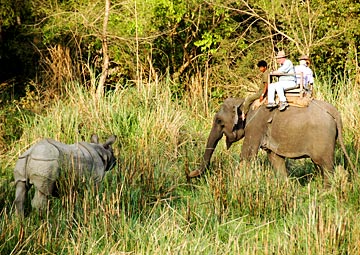
    A close encounter with a Rhinoceros as seen on our Wild Himalaya Trip

    For more information on JOURNEYS family, Community Based or other types of adventure travel go to www.journeys.travel  

    Tags: , , , , , , , , , , , , , , , , , , , , , , , , , , , , , , , , , , , , , , , , , , , , , , , , , , , , , , , , , , , , , , , , , , , , , , , , , , , , , , , , , , , , , , , , , , , , , , , , , , , , , , , , , , , , , , , , , , , , , , , , , , , , , , , , , , , , , , , , , , , , , , , , , , , , , , , , , , , , , , , , , , , , , , , , , , , , , , , , , , , , , , , , , , , , , , , , , , , , , , , , , , , , , , , , , , , , , , , , , , , , , , ,